Looking for murals & street art in Amsterdam
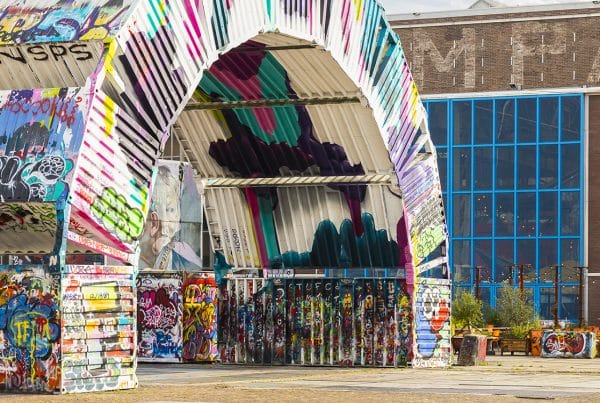
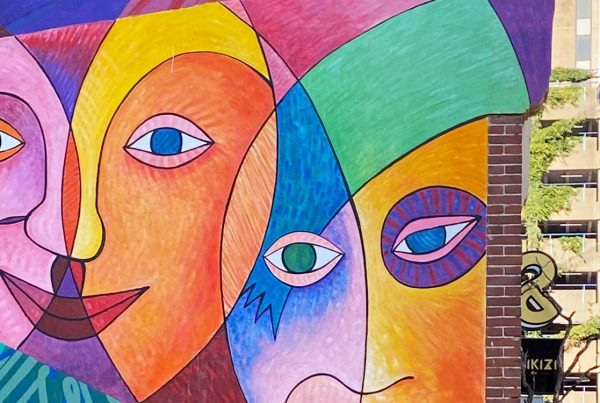
Anyone in Amsterdam looking for their street art and graffiti fix can always head to a few well-known spots – the walls of the NDSM site in North, freshly sprayed almost daily, the viaduct on Flevoparkweg, or the more permanent street art murals of the RUA project in the Bijlmer, the “If Walls Could Speak” giants in East, and the SAMA open-air museum in Nieuw-West.
If you know what you're looking for and know a little bit about modern city history, you can move around Amsterdam like a true graffiti archaeologist and uncover the hidden street-art gems.
The origin of graffiti in Amsterdam
But the 'old-school' graffiti enthusiast knows that street art in a city or neighborhood consists not only of 'large works', but primarily of tags, throw-ups, pieces, and stencils. That is certainly the case with graffiti and street art in Amsterdam.
This art form, originating in New York and Philadelphia in the 70s, quickly gained followers in our capital. Around 1975, when a number of major urban renewal projects were being developed in the city, the first signs of graffiti appeared on the walls.

Amsterdam “no pipes but houses”
Nieuwmarktbuurt and the anti-squat and punk movement
During the construction of the metro pipes under the Nieuwmarkt area in the center of the city, ravaged by the hammer, protest slogans appear on the remains of the demolition work. And not much later, the 'names' of the now legendary Dr. Rat, De Zoot and Vendex, hailing from the anti-squat and punk movement, emerge.
Traces of this can still be found in the old, enclosed pedestrian tunnels under Mr. Visserplein , where the indoor playground TunFun is located today. The place was unique in the city because it was a kind of enclosed no-man's-land, where, after acquiring some climbing skills, you had a workspace with plenty of wall room.
In the mid-80s, graffiti began to focus more on New York design. Unique styles were created, with specific colors and lettering, and thus a true street art developed . Art in which skills were not taught through an institutionalized academy, but could be made part of your repertoire through practice and innate talent on the street.

Mr. Fisherman's Square in Amsterdam
Mr. Visserplein and the pioneers of the 80s
This new generation of 'writers' included Shoe, Delta, and Joker, who was among the first to expand his pieces with 'graffiti characters'. Traces of that past can be found not only in the enclosed spaces of 'TunFun' but also in other places throughout the city. If you know what you are looking for and have a basic understanding of modern urban history, you can move through Amsterdam like a true graffiti archaeologist and unearth hidden gems. Please note: for some works, you will need binoculars, a boat, or a paddleboard!
From the early days of Shoe (who is still active), two tags can still be found in Amsterdam. The first is located on the side of a small bridge between a number of willows in the Beatrixpark. Due to the green camouflage of the spray paint, the graffiti does not stand out very much, which presumably increased the tag's chances of survival.
Only when you sail or paddle close to it do you see the half-faded letters of 'Shoe' looming up next to those of another legend, 'Dr. Air'. The second vintage 'Shoe' is located on the Jaagpad, under a viaduct of the A10. It dates from 86 and is now accompanied by tags of newer generations, creating a kind of cluster.
-

- Shoe + Dr. Air photo @ccartlover
-

- Shoe photo @ccartlover
The lesser known graffiti spots and 'meeting corners'
You can find such ' graffiti spots ' , less known to the layman, in all neighborhoods of the city. For example, in the city center there are still a number of alleys that are filled from top to bottom with tags, figures, or the occasional piece.
One of these narrow alleys in the heart of Amsterdam is the Korte Korsjespoortsteeg. The raw wall with peeling plaster gives you a bit of a feeling as if you are in New York . Names like Ketch, Pak, and Omce stand alongside new attempts and remnants of an old façade sign.
A number of street corners in Amsterdam Oud-Zuid appear slightly more organized. Here, too, tags adorn the walls: Again, Omce, Nuke, Zys, Une, ZK, Aize, to name a few. These meeting corners are reminiscent of the walls of the 1980s, when virtually every street corner looked like this. It is remarkable that international graffiti artists , such as Christian Guemy – alias C215 – also manage to find these spots and do not hesitate to leave something behind.
-

- Jordaan - C215 photo @ccartlover
-

- Lairessestraat photo @ccartlover
Street art along the Amsterdam canals
In addition to the alleys and street corners, walls along the canals form a beautiful surface for graffiti and street art . Under various bridges and along a number of quays, work by well-known and anonymous writers and artists can be seen.
A recent example is the 'blockbuster' by AGAIN and OMCE along the Amstel. This is one of old-fashioned boldness. The simple yet highly distinctive letters burst off the quay wall. This is what a ' blockbuster ' should be: the letters are large, sleekly executed, with few details, and therefore legible from a kilometer away.
A bit older is the work of 'Carlos' on the Ruysdaelkade: the letters are already quite worn out but still reflect beautifully in the water of the canal. The same applies to the monkey head of the English legends Mighty Monkey and Sweet Toof on the Reijnier Vinkeleskade near Beethovenstraat.
The sleeping Smurf by Streetart Frankey on the quay wall of the Korte Marnixkade and the lesser-known Cheeky Monkey, visible only to the very observant graffiti spotter under various bridges of the Stadionkade, belong to the same category.
-

- Carlos photo @ccartlover
-

- Mighty Monkey + Sweet Toof photo @ccartlover
Written texts, slogans and quotes
Alongside the work of the old superheroes and the new generations of street art artists building upon it, another trend is becoming increasingly noticeable… we are seeing socially engaged slogans on walls and streets more and more often. It is a genre that owes a great deal to Laser 3.14 – ubiquitous on the fences of Amsterdam construction sites.
Sometimes a 'background story' on Instagram is used to support the critical, somewhat cryptic texts. The work of Ambrien Moeniralam and Hans de Tweede are examples of this. The transient, chalked texts of Cat Calls of Amsterdam (Ambrien) refer to expressions of street intimidation at the exact location of the incident.
The slogans written in pastel tones on the sidewalk confront the curious reader with brutal words, thereby raising awareness of street harassment, as it were. With his 'Save the Curl like Tim', Hans de Tweede refers to the disappearance of the urinal from the Amsterdam streetscape. Tags by Rumoer (anti-everything) and NotoiR also have a raw quality in their execution, thereby aligning with the written slogans from the early days of graffiti in Amsterdam.
-

- Hans de Second photo @ccartlover
-

- Laser 3.14 photo @ccartlover
The further development of street art and graffiti in Amsterdam
How will graffiti and street art in Amsterdam develop in the near future? A number of trends will continue regardless: engaged, humorous, territorial, and purely aesthetic work will continue to grow, but enriched with new techniques, including projection in particular.
Museums will continue to face difficulties in the near future, and the outdoors offers inexhaustible possibilities. We will continue to see tags, stencils , throw-ups, murals, and other forms of street art and graffiti in the city, but when it comes to alternative exhibition space, large projections offer opportunities.
We are already used to viewing enormous works from a distance, and due to the COVID crisis, museums will look for new challenges. Think of street projections that transform entire neighborhoods into a huge exhibition space. A digital Wynwood in Amsterdam, I'm all for it!
Not yet finished reading about street art? Check out this one too blog messages: The murals of Heerlen as a large open-air museum, Murals, tags and street art in Utrecht of Street Art in Rotterdam, from the past to the present.
Do you have any questions or would you like to know more about street art?
Do you have questions, comments, or suggestions about street art and graffiti in Amsterdam ? Would you like to know more about the history, commission a piece of graffiti , or try your hand at it yourself during a graffiti workshop in Amsterdam? Then feel free to contact one of our specialists without obligation.